
Exploring New Approaches to Neutrino Flavor Transport
Event ID: INT-27-97W
Note: This is an in-person workshop but virtual participants may be accommodated on a case-by-case bases. A workshop registration fee may apply.
Overview:
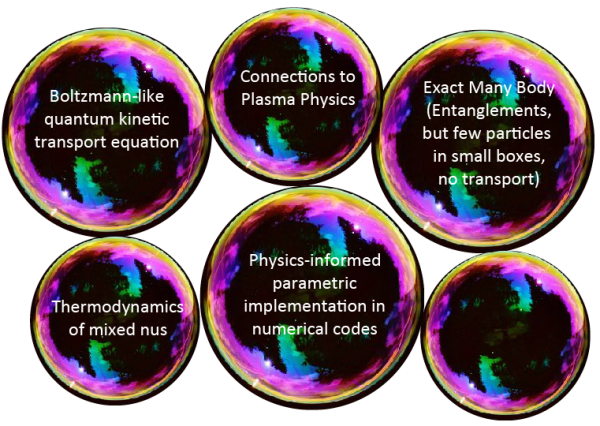
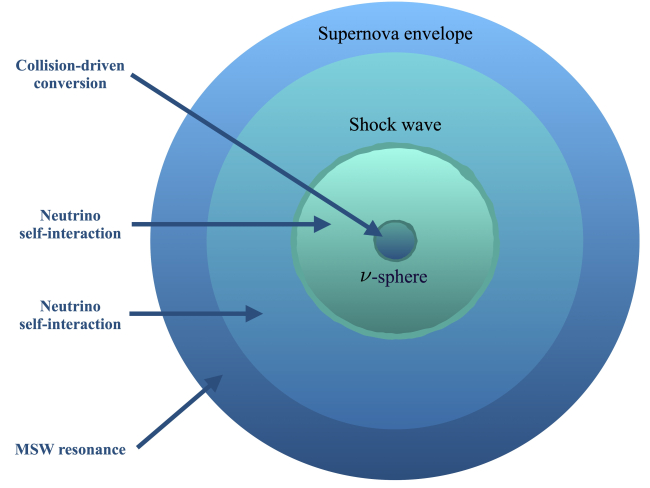
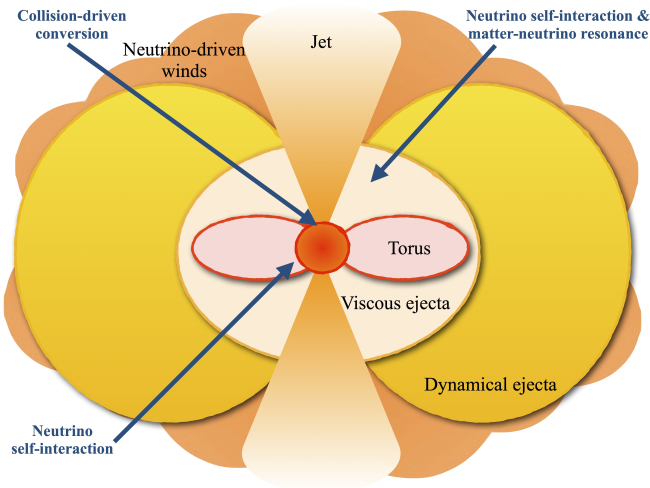
Because of the large disparity between the scales of neutrino oscillations and hydrodynamics, neutrino flavor mixing has only recently begun to be implemented in simulations of core-collapse supernovae (CCSNe) and neutron star mergers (NSMs), and even then only through approximate approaches. Several new methods for modeling neutrino flavor transport have been developed largely in isolation from one another, leading to confusion about their validity and mutual compatibility — particularly around whether the mean-field approach is well founded from an underlying many-body theory, which components of the many-body Hamiltonian must be treated, and whether the relevant length scales warrant a Boltzmann-like treatment of neutrino radiation.
This workshop will bring together experts in neutrino oscillations and astrophysical simulations for a candid discussion of the state of the art, the validity of current assumptions, and how the different approaches may be reconciled or unified. A second major goal is to deepen the connection between neutrino-oscillation theorists and simulation groups, to enable a self-consistent implementation of neutrino flavor conversion in the next generation of CCSN and NSM simulations — work that bears directly on our understanding of the role of neutrinos in these events and their impact on heavy-element nucleosynthesis.
The workshop format will consist of two talks each morning followed by open discussion in the afternoon, with a poster session mid-week for students and postdocs to present their work. We strongly encourage applications from early-career researchers — the multidisciplinary nature of this field, spanning particle and nuclear physics, astrophysics, and many-body physics, makes it an excellent opportunity for graduate students and postdocs to broaden their expertise and build their network.
Exploring New Approaches to Neutrino Flavor Transport
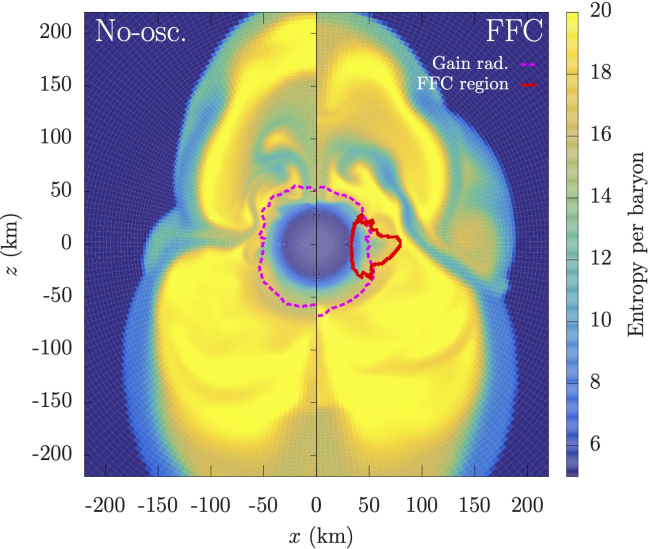
Akaho et al., Phys.Rev.Lett. 136 (2026) 19, 191002
Exploring New Approaches to Neutrino Flavor Transport
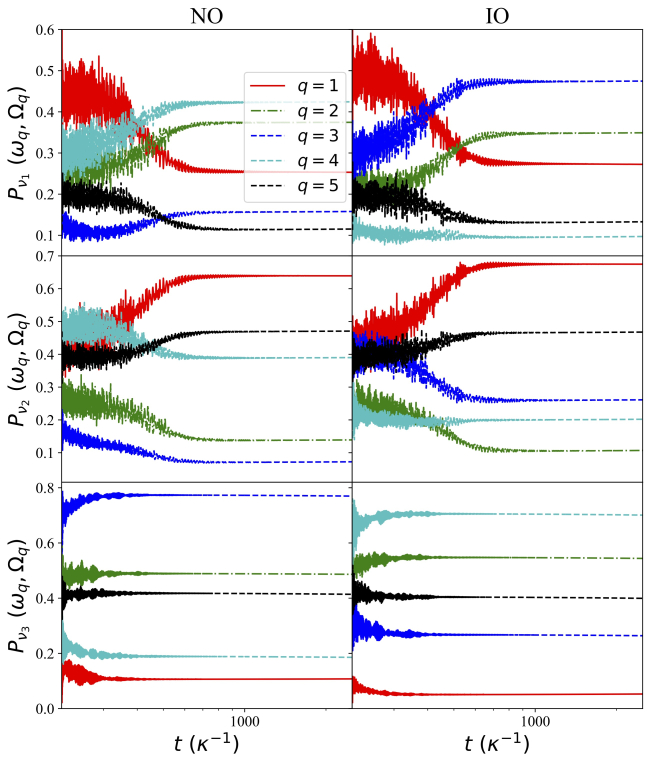
Balantekin et al., Eur.Phys.J.A 59 (2023) 8, 186
Exploring New Approaches to Neutrino Flavor Transport
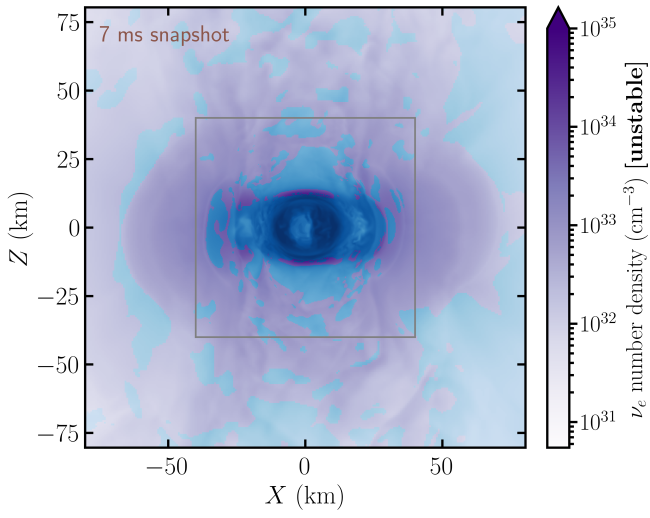
Richers et al., Phys.Rev.D 110 (2024) 10, 103019
Exploring New Approaches to Neutrino Flavor Transport
Tamborra, Nature Rev.Phys. 7 (2025) 6, 285-298
Exploring New Approaches to Neutrino Flavor Transport
Tamborra, Nature Rev.Phys. 7 (2025) 6, 285-298
Exploring New Approaches to Neutrino Flavor Transport
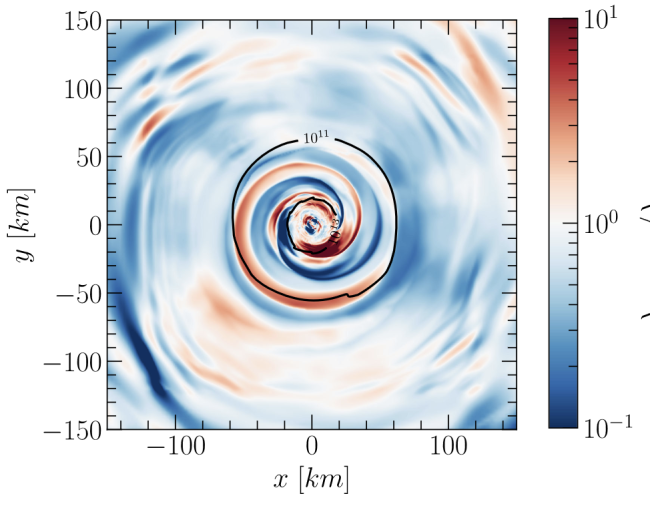
Qiu et al., Phys. Rev. Lett. 135, 091401
Exploring New Approaches to Neutrino Flavor Transport
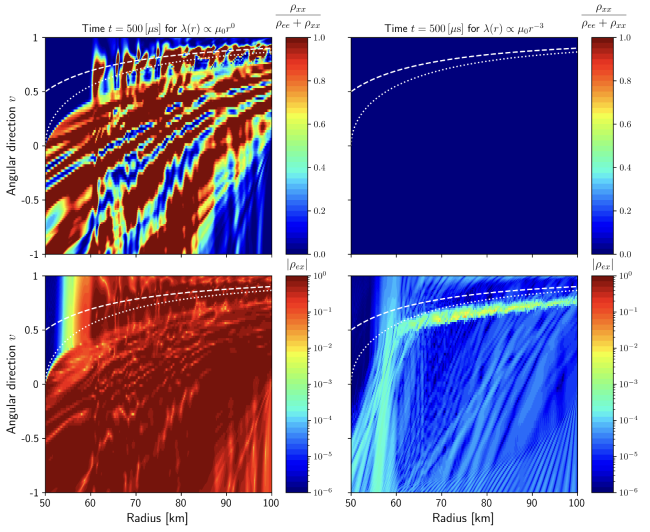
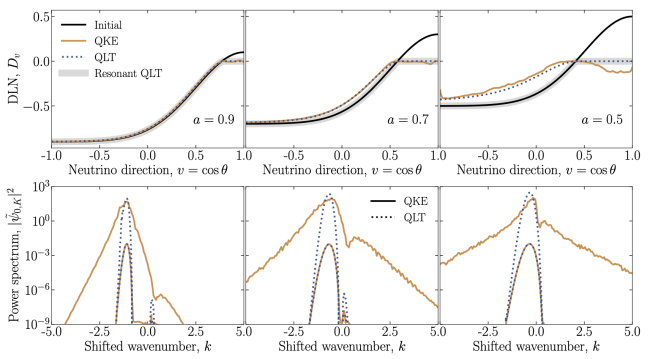
Zaizen et al, arXiv:2604.13617
Exploring New Approaches to Neutrino Flavor Transport
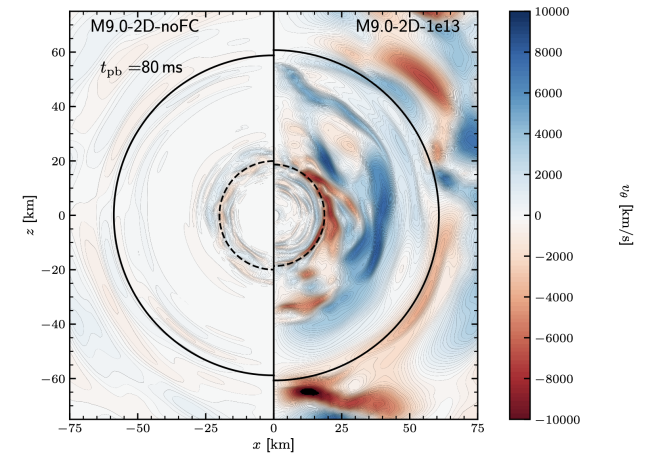
Fiorillo & Raffelt, arXiv:2603.28854
Exploring New Approaches to Neutrino Flavor Transport
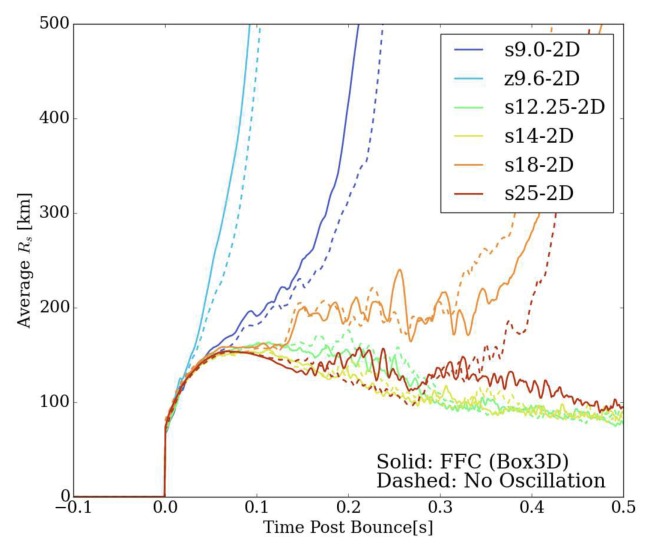
Ehring, PhD Dissertation
Exploring New Approaches to Neutrino Flavor Transport
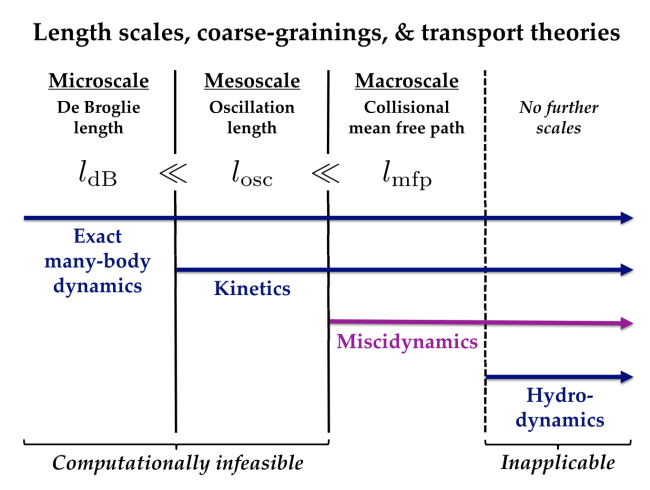
Wang & Burrows, ApJ 986 153
Exploring New Approaches to Neutrino Flavor Transport
Johns, Phys. Rev. D 112, 063032
Exploring New Approaches to Neutrino Flavor Transport
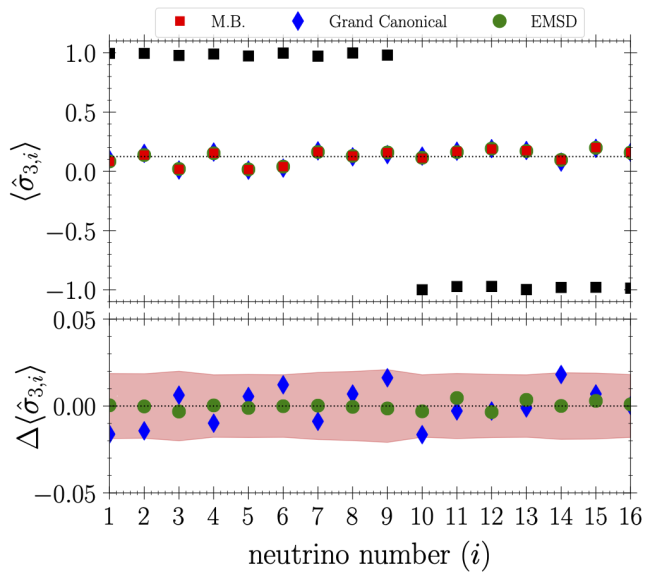
Martin et al, Phys.Rev.D 108 (2023) 12, 123010
Exploring New Approaches to Neutrino Flavor Transport
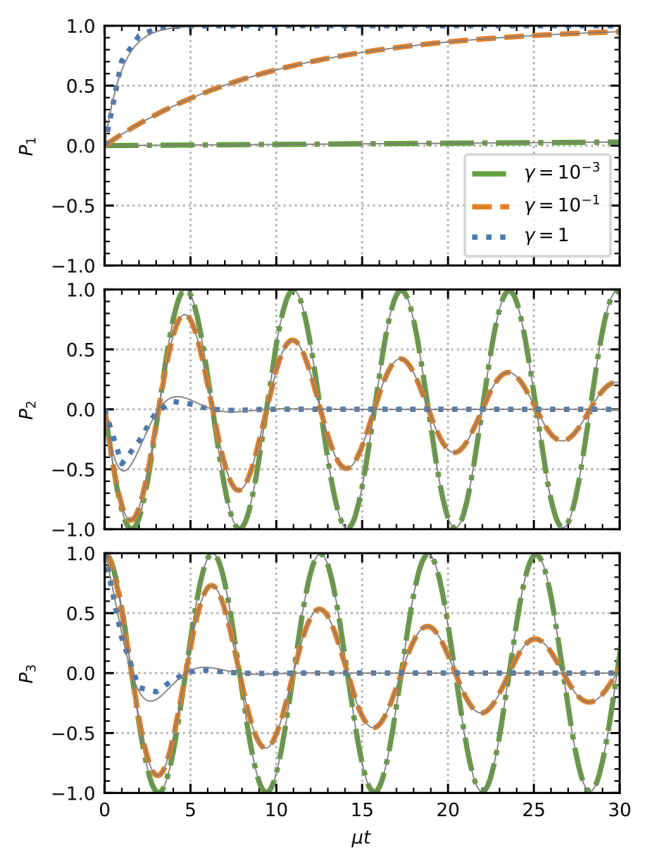
Kost et al, Phys.Rev.D 109 (2024) 10, 103037