GW170817, Ten Years Later
TBA
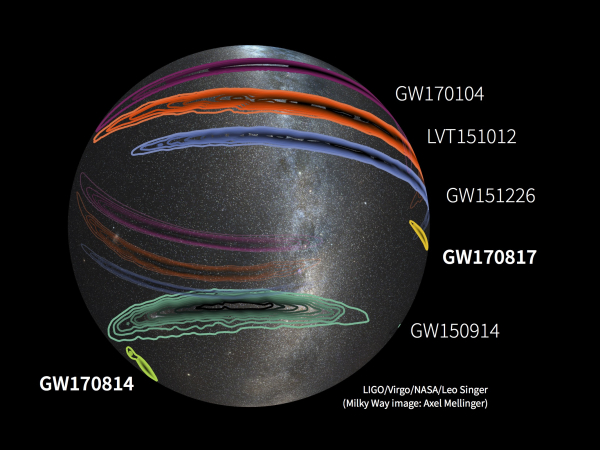
GW170817, Ten Years Later: What have we learned, open problems, and future prospects
Co-sponsored by the INT, N3AS, CeNAM and FRIB
On August 17, 2017, the LIGO-Virgo network detected gravitational waves from a pair of merging neutron stars and localized them to a region small enough to search. Fermi-GBM caught a short gamma-ray burst 1.7 seconds after the merger, confirmed within minutes by INTEGRAL; eleven hours later, a kilonova was found in NGC 4993. What followed was extraordinary: a single event tied short gamma-ray bursts to merging neutron stars, delivered the first standard-siren measurement of the Hubble constant, gave us our first handle on the tidal deformability of neutron stars, and showed us the r-process in action for the first time. Nearly ten years and thousands of papers later, that data are still producing results but much is left unanswered: when (and if) the remnant collapsed, how much r-process material was ejected, or how GRB 170817A was launched. At the time of writing, GW170817 remains the only multi-messenger transient of its kind, involving gravitational-waves. However, the next such event will come at any time. When it does, much of the work will be done by researchers who were in middle school in 2017, two, or more PhD generations removed from the discovery and from everything the community learned by living through it. The 10th anniversary of GW170817 provides us with a unique opportunity: bring veterans and future leaders together to celebrate GW170817, share everything the different communities have learned from the data, and chart the future of multi-messenger astronomy by ensuring continuity between the first and (expected) second multi-messenger neutron star binary.
We propose to hold an international conference on the 10th anniversary of GW170817. We aim to bring together about 100 astronomers, gravitational-wave experimentalists and data analysts, modelers, and nuclear theorists. Our aim is twofold. First, we wish to summarize the current understanding of those observations, the results of 10 years of continued and intense observational and modeling effort by the community. Second, we want to lay the foundations for the next major discovery in the field: what went right in 2017, and what could have been done better? What are the open problems and future prospects? We also want to bring together the pioneers of multi-messenger astronomy, those who made GW170817 a reality, and those who have started graduate school after 2017: the future leaders of our field.
We envision a five-day conference, with roughly the equivalent of one day devoted to gravitational-wave detection and sky localization, two to radio, X-ray, and optical astronomy, one to modeling and data analysis, and one to nuclear astrophysics. Rather than confining each theme to its own day, we would distribute the sessions so that each day combines observational, modeling, and nuclear-physics perspectives. Each day would open with an invited keynote from a recognized leader in the field, identified with help from the scientific advisory board (TBD), and close with a panel discussion on open problems and future prospects. In between, we would schedule short contributed talks and longer invited talks. We will give precedence to early-career speakers for the contributed talks. Panels would be deliberately cross-cut, seating observers alongside modelers and nuclear theorists. One of the days will feature a public lecture, to be co-organized with the University of Washington Astronomy Department. We would advertise through scientific societies (APS, AAS) and international collaborations (IReNA/CeNAM, Vera Rubin, FRIB, LVK, among others).